Falls are one of the most common causes of injury among older adults. For families and caregivers, reducing fall risk is one of the most important ways to protect a loved one's safety, mobility, and independence at home.
Why Fall Prevention Matters
A single fall can lead to broken bones, hospital visits, reduced confidence, and a longer recovery period. In some cases, a fall can change a person's ability to live independently. That is why fall prevention should be part of every senior care plan.
Common Risk Factors for Falls
Understanding the causes of falls is the first step toward prevention. Common risk factors include:
- Mobility issues such as weakness, pain, stiffness, or poor balance.
- Vision problems that make it harder to notice obstacles or changes in flooring.
- Medication side effects including dizziness, drowsiness, or low blood pressure.
- Chronic health conditions such as arthritis, diabetes, Parkinson's disease, or stroke recovery.
- Environmental hazards like loose rugs, clutter, uneven surfaces, and poor lighting.
How to Prevent Falls at Home
1. Create a Safer Home Environment
- Remove cords, loose rugs, and clutter from walkways.
- Keep commonly used items easy to reach.
- Arrange furniture to create wider, safer walking paths.
2. Improve Lighting
- Use bright lighting in hallways, bathrooms, kitchens, and stairways.
- Add nightlights in bedrooms and near bathrooms.
- Make sure light switches are easy to access.
3. Install Grab Bars and Handrails
- Place grab bars in showers, tubs, and near toilets.
- Install sturdy handrails on both sides of stairs when possible.
- Check that railings and support bars are secure.
4. Use Non-Slip Surfaces
- Use non-slip bath mats in bathrooms.
- Choose rugs with non-skid backing or remove them entirely.
- Clean up spills right away to prevent slippery floors.
5. Encourage Safe Use of Assistive Devices
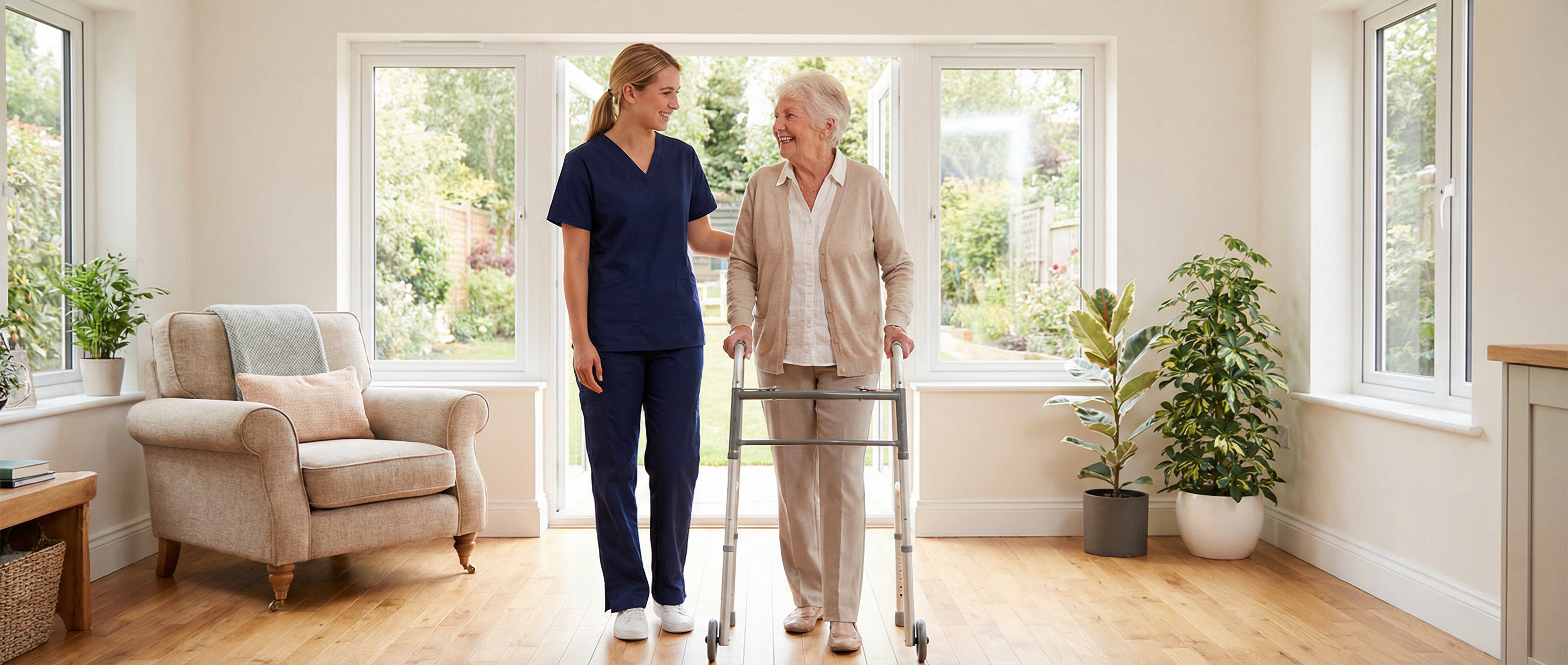
Canes, walkers, and other mobility aids can improve balance and confidence when they are fitted and used correctly. If needed, ask a healthcare professional or therapist to recommend the right device.
6. Support Strength and Balance
Exercise can play a major role in fall prevention. Gentle movement programs such as walking, stretching, chair exercises, tai chi, or supervised balance training may help improve strength and stability.
7. Review Medications Regularly
Some medications increase fall risk. A medical provider can review prescriptions and identify side effects that may contribute to dizziness or weakness.
8. Check Footwear
- Choose shoes with non-slip soles and good support.
- Avoid worn-out slippers or loose shoes that increase instability.
- Encourage shoes that fit properly indoors and outdoors.
Fall Prevention in Key Areas of the Home
Bathroom Safety
- Use a shower chair if standing is difficult.
- Add grab bars and a handheld showerhead.
- Keep floors dry and clutter-free.
Bedroom Safety
- Place a lamp or switch within easy reach of the bed.
- Keep pathways to the bathroom clear.
- Use a stable chair for dressing if needed.
Kitchen Safety
- Store everyday items at waist or shoulder height.
- Avoid using step stools without support.
- Keep frequently used counters clear and organized.
Helpful Technology for Fall Prevention
Technology can add another layer of safety, especially for seniors who spend time alone.
- Medical alert devices for emergency help after a fall.
- Motion sensors or smart home alerts for unusual movement patterns.
- Wearables that notify caregivers after sudden impact or inactivity.
Final Thoughts
Preventing falls is not just about avoiding injury. It is about preserving dignity, confidence, and independence. With thoughtful home modifications, regular check-ins, and the right caregiver support, families can create a safer environment for loved ones aging at home.